3ème édition | 20, 21, 22 NOVEMBRE 2026 | Reims
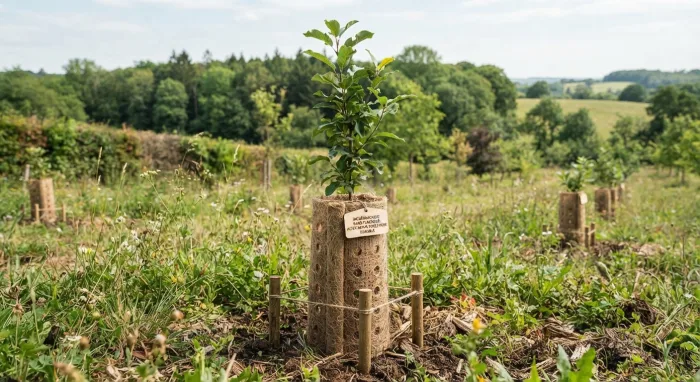
Plastic tree guards are widely used in forests, orchards, agroforestry systems and gardens. They protect young plants from wildlife, rodents and certain weather-related hazards. However , they generate waste, break down into microplastics and require costly removal work. This project aims to design a practical, affordable and durable protective solution that serves the same purpose without leaving plastic in the environment. Several approaches are possible: bio-based materials (plant fibres, wood, wool, straw, hemp, compostable bioplastics), reusable guards, new designs, or collective protection systems that eliminate the need for individual guards.
Quel est le problème que tu souhaites résoudre ?
Plastic guards for young trees are effective, but they create several problems. They generate waste if they are not removed, or microplastics if they deteriorate on site. When they are removed, collection requires significant labour, and recycling remains difficult because they are often dirty and scattered over large areas.
Current alternatives are not always suitable. Some are too expensive, too fragile or degrade too quickly. Others degrade too slowly or do not provide sufficient protection against deer, rabbits and rodents.
There is therefore a need for a solution that is effective, affordable, easy to install and genuinely compatible with the reduction of plastic waste.The objective of the hackathon is to produce a testable concept: material selection, design, estimated cost and a field-testing protocol, developed in collaboration with forestry, agricultural and research stakeholders.
During the hackathon, the team will compare these approaches using a set of criteria: effectiveness, cost, installation and removal requirements, environmental impact, and user acceptance. It will then select one or two solutions to develop into a prototype or detailed concept. It will also prepare a field-testing plan for the next iteration.
Comment souhaites-tu le résoudre ?
Alternative materials: plant fibres, wood, treated cardboard, wool, straw, hemp, mycelium and bioplastics. Their lifespan, actual biodegradability, cost and local availability will be assessed.
– Biodegradable or reusable guards: protective structures that degrade after the critical period, or that can be easily recovered and reused.
– New designs: shape, ventilation, anchoring, rapid installation, resistance to wildlife, and effects on tree growth.
– Alternatives to individual guards: collective plot protection, natural repellents, companion plants, vegetative barriers or lightweight structures.
3 jours, 1 mission :
Des idées pour demain
Restons connectés, l’aventure commence !
